
Brône - Rigo Neurophysiology lab
"Excited about inhibition & moved by migration"
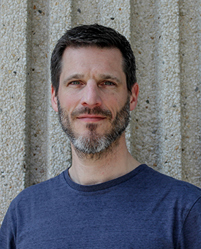
Prof. dr. Bert Brône
Neurodevelopment
Microglia
Glycine receptor
Cell physiology
Electrophysiology
Contact:
+32 (11) 26 92 37
bert.brone@uhasselt.be
ResearchGate
LinkedIn
ORCID
Prof. dr. Jean-Michel Rigo

Neurodevelopment
Electrophysiology
Ligand-gated ion channels
Microglia
Docimologie
Contact:
+32 (11) 26 80 04
jeanmichel.rigo@uhasselt.be
Research
Research
Our brain is a fascinating organ that becomes progressively more active and refined throughout development. It is therefore not surprising that disruption of brain development by genetic and environmental factors can lead to neurodevelopmental disorders such as autism spectrum disorder and schizophrenia.
Since proper neurodevelopment relies on a complex interplay between neurons and microglia, our research focuses on how genetic factors affect these two cell types.
In neurons, mutations in the Glra2 gene, which encodes the inhibitory glycine receptor α2 subunit, have been linked to autism spectrum disorder and directly impair inhibitory signaling in the brain.
Genetic risk factors for schizophrenia, such as DISC1 mutations, affect microglia, the brain's highly dynamic immune cells. Here, we investigate how disrupted cytoskeletal control in microglia contributes to abnormal brain rewiring.
Combining our expertise in electrophysiology and live imaging in both murine and fruit fly models, we aim to understand the mechanisms of normal and pathological brain development, in order to identify new therapeutic targets for neurodevelopmental disorders.
People
People
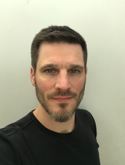 Prof. dr. Bert Brône
bert.brone@uhasselt.be
 Prof. dr. Jean-Michel Rigo
jeanmichel.rigo@uhasselt.be
Microglia research line
Name: DELBROEK Amber
Email: amber.delbroek@uhasselt.be
Project title: Molecular control of actin rearrangement in phagocytic cells
Name: Van Esser Stijn
Email: stijn.vanesser@uhasselt.be
Project title: Reprogramming Microglial Phagocytosis: The CapZIP regulatory Axis as a druggable Switch to Halt Cognitive Decline
Glycine Receptor research line
VAN BOCXLAER Amber
amber.vanbocxlaer@uhasselt.be
Project title: Cellular and Subcellular Mapping of Glycine Receptor α2 Activity in the Adult Striatum
Techniques
Techniques
- Cell and brain slice electrophysiology,
- Time lapse imaging in acute brain slices
- High-end imaging techniques
- Migration and phagocytosis assays
- Animal behavioral tests
- Drosophila melanogaster
- In vivo imaging
- Genetic tools for cytoskeletal imaging
Publications
Publications
§ Both authors contributed equally
1. Vella Y, Proces A, Van Bocxlaer A, Trippaers C, Lara CO, Uslu O, Piccart E, Harvey RJ, Yevenes GE, Moraga-Cid G, Saudou F, Schiffmann SN, Rigo JM, Hendrix J and Brone B. Nanoscale activity mapping of chloride-permeable pentameric receptors. ACS Sens. (2026); 11 (2): 1020–1032 [IF: 10.9 (2025)].
2. §Kessels S, §Trippaers C, Mertens M, Hamad I, Rombaut B, Janssen A, Ramanathan K, Duwe S, Gharghani AM, Theuwis R, Delbroek A, Vangansewinkel T, Berden L, Beeken J, Vandormael P, Poovathingal S, Voets T, Kleinewietfeld M, Nguyen L, Antel JP, Healy LM, Cowley SA, Ishizuka K, Rigo JM, Hendrix J, Vanmierlo T, Dewachter I, Alpizar YA, Sawa A and Brone B. Cytoskeletal control in adult microglia is essential to restore neurodevelopmental synaptic and cognitive deficits. Sci Adv. (2025); 11 (35): eadw0128 [IF: 13.9].
3. Berden L, Rajan N, Mbouombouo Mfossa AC, De Bie I, Etlioglu E, Benotmane MA, Verslegers M, Aourz N, Smolders I, Rigo JM, §Brone B and §Quintens R. Interneuron migration impairment and brain region-specific DNA damage response following irradiation during early neurogenesis in mice. Cellular and Molecular Life Sciences. (2025); 82 (1): 118 [IF: 6.5].
4. Beeken J, Mertens M, Stas N, Kessels S, Aerts L, Janssen B, Mussen F, Pinto S, Vennekens R, Rigo JM, Nguyen L, §Brone B and §Alpizar YA. Acute inhibition of transient receptor potential vanilloid-type 4 cation channel halts cytoskeletal dynamism in microglia. Glia. (2022); [IF: 6,2].
5. Smolders SMT, Kessels S, Vangesewinkel T, Rigo JM, §Legendre P and §Brone B. Microglia: Brain cells on the move. Progress in Neurobiology. (2019); [IF: 9,371].
In collaboration
1. Camuso S, Vella Y, Youjil Abadi S, Mille C, Brone B and Specht CG. Single molecule counting detects low-copy glycine receptors in hippocampal and striatal synapses. Elife. (2026); 14 [IF:
2. Vanherle S, Janssen A, Gutierrez de Rave M, Janssen B, Lodder C, Botella Lucena P, Kessels S, Hardy J, Vandeput E, Wang Y, Stancu IC, Segal A, Kleinewietfeld M, Voets T, Brone B, Poovathingal S, Alpizar YA and Dewachter I. Apoe deficiency inhibits amyloid-facilitated (a) tau pathology (t) and neurodegeneration (n), halting progressive atn pathology in a preclinical model. Mol Psychiatry. (2025); [IF: 10.4].
3. Proces A, Alpizar YA, Halliez S, Brone B, Saudou F, Ris L and Gabriele S. Stretch-injury promotes microglia activation with enhanced phagocytic and synaptic stripping activities. Biomaterials. (2024); 305 122426 [IF: 12.8].
4. Paolicelli RC, Sierra A, Stevens B, Tremblay M-E, Aguzzi A, Ajami B, Amit I, Audinat E, Bechmann I, Bennett M, Bennett F, Bessis A, Biber K, Bilbo S, Blurton-Jones M, Boddeke E, Brites D, Brône B, et al. Microglia states and nomenclature: A field at its crossroads. Neuron. (2022); 110 (21): 3458–3483 [IF: 16.2].
5. Even A, Morelli G, Turchetto S, Shilian M, Le Bail R, Laguesse S, Krusy N, Brisker A, Brandis A, Inbar S, Chariot A, Saudou F, Dietrich P, Dragatsis I, Brone B, Broix L, Rigo JM, Weil M and Nguyen L. Atp-citrate lyase promotes axonal transport across species. Nature Communications. (2021); 12 (1): [IF: 17.694].
Microglia game
Microglia game
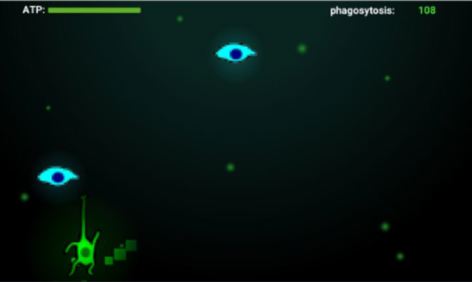
Play the Microglia-game!
Podcast "passie en wetenschap"
Universiteit van Vlaanderen: Waarom doet zout in een wonde zoveel pijn?

Universiteit van Vlaanderen: Lokt kortsluiting in de hersenen autisme uit?